11 Things That Require Zero Talent: Summary Review
What if greatness isn’t a gift reserved for the talented few but a collection of simple, powerful habits anyone can cultivate? In 11 Things That Require Zero Talent: That Will Make You Great, Allistair McCaw turns that idea into a compelling guide, showing how small actions, not innate gifts, shape true success.
What is the Book About?
This book unpacks a deceptively simple truth: greatness often springs not from extraordinary talent, but from everyday habits within reach of everyone. McCaw explores eleven fundamental qualities—like effort, attitude, energy, and consistency—that cost nothing yet yield profound results. He weaves together stories from elite performers, illustrating how discipline and mindset matter far more than flashy skills.
Drawing on his decades of experience coaching athletes, teams, and leaders, McCaw breaks down how you can embed these zero-talent principles into your life. He shows that by paying attention to things like being coachable, having a strong work ethic, and showing gratitude, you cultivate habits that elevate performance across all areas—sports, work, relationships, you name it. The tone is conversational and motivating, inviting readers to rethink what success really demands.
Book Details
Print length: Approximately 176 pages (paperback edition) Language: English Publication date: November 27, 2024 Genre: Self-help / Personal development
Book Author
Core Theme
At its heart, this book champions the idea that greatness isn’t a lottery win, but a daily choice. McCaw dismantles the myth that you need special talent to stand out. Instead, he emphasizes traits available to all—like being on time, showing energy, applying effort, and embracing accountability. These are foundational habits that, when practiced consistently, build momentum and meaningful change.
He argues that shifting your focus from what you lack to what you can do—daily, deliberately—builds resilience and confidence. The philosophy isn’t about dramatic leaps; it’s about the small, sustainable actions that stack over time. Through warm, relatable examples, he invites readers to view these no-cost qualities not as optional extras, but as non-negotiable keys to personal and professional excellence.
Main Lessons
A few impactful summary lessons from 11 Things That Require Zero Talent:
1. Greatness Begins With a Personal Decision
One of the core revelations in this book is that greatness is not a privilege bestowed upon a select few—it’s a choice, an active pursuit that begins with a personal decision to commit to growth. Contrary to the myth that greatness is reserved for the inherently gifted, the book dismantles this belief by highlighting how even world-class performers like Tiger Woods, Vanessa Mae, and Taylor Swift started out not as prodigies, but as individuals who were willing to dedicate themselves tirelessly to their craft. Their excellence wasn’t prepackaged at birth—it was earned through sweat, sacrifice, and relentless discipline. This lesson sets the foundation that you don’t need to be born with extraordinary talent to become extraordinary; you need the hunger to succeed, and the will to do the work that others often avoid.
2. The Right Attitude Sets the Tone for Success
Everything rises and falls on attitude. It’s the invisible filter through which we process challenges, interpret feedback, and navigate adversity. The author makes it unequivocally clear: even if you have talent, without the right attitude, you will never unlock your full potential. Attitude is mission control—it governs whether you are coachable, how consistent your efforts are, and how resilient you become in tough times. High performers aren’t immune to failure, negativity, or frustration. What distinguishes them is their ability to reframe those experiences with optimism and ownership. Like choosing your clothes or your breakfast, your attitude is a daily choice. It’s the key variable that influences whether you play the victim or the victor in the story of your life.
3. Your Mindset Is More Powerful Than Your Mood
Feelings come and go, but a powerful mindset can anchor you through the storm. The book emphasizes that success isn’t built on motivation alone, because motivation is fickle. Instead, it’s built on consistency—choosing to stick to the plan even when your mood tempts you to quit. The author shares how he starts each day with gratitude, training his mind to lean into positivity rather than letting emotions run the show. This habit-based approach to shaping your mindset means that rather than reacting to life, you can respond with intention. Whether it’s waking up tired or facing setbacks, the habit of reframing your thoughts allows you to reclaim control. This discipline transforms you from someone who is emotionally tossed around to someone who can steer their course even in turbulent waters.
4. Positive Thinking Is a Strategic Advantage
Optimism is not naïveté; it’s a competitive edge. The author makes a compelling case that positive thinking is not about ignoring problems but rather facing them with a clearer, more solution-focused lens. When your mind is filled with negativity, your performance suffers—like trying to sprint while dragging weights. But when you fill your mental well with positive thoughts, what comes up in the “bucket” is resourceful energy, resilience, and creativity. Top athletes and leaders don’t deny the presence of obstacles—they just refuse to be paralyzed by them. They see adversity as a test, not a verdict. When you train your mind to expect solutions and believe in progress, you develop the internal fuel necessary to keep going when others fall away.
5. Taking Ownership Transforms Your Outcomes
At the heart of all peak performance lies one powerful principle: ownership. The moment you accept that your results are your responsibility—regardless of circumstances—you unlock your potential. This lesson is drilled home throughout the book, reminding us that while we can’t control everything that happens, we can absolutely control our response. Taking ownership doesn’t mean everything will be easy, but it does mean you stop waiting for external changes and start making internal decisions. Victimhood delays progress; ownership accelerates it. The most successful people don’t waste energy blaming others, complaining, or making excuses. They recognize that personal accountability is the launchpad for every breakthrough.
6. Challenges Reveal Your True Character
Adversity doesn’t just test your attitude—it reveals your character. When things are going well, it’s easy to show up with enthusiasm and discipline. But the real question is: who are you when things fall apart? According to the author, the elite are defined not by how they perform when everything goes right, but by how they behave when the wheels come off. That’s when the average start blaming, quitting, and sulking. The great ones? They lean in harder, stay composed, and rise to the occasion. Adversity is the gym in which mental toughness is forged. If you can train yourself to see difficulty as a proving ground rather than a dead end, you build the emotional muscles needed to succeed when it matters most.
7. Your Response Is Always Within Your Control
You might not have chosen your starting point in life, but you absolutely control your next move. This book drives home the liberating truth that while circumstances vary, your response is always within your power. Life is only 10% what happens to you—the remaining 90% is how you react. That one shift in perspective puts you back in the driver’s seat. Every day, you get to choose your emotional tone, your energy, your narrative. Even in difficult situations, you can reclaim power by how you interpret and respond to the challenge. It’s not about being fearless—it’s about responding with clarity, courage, and intention.
8. Grit Is the Fuel That Keeps You Going
Effort alone isn’t enough—it needs to be sustained over time, and that’s where grit comes in. Grit, as the author defines it, is the engine of perseverance. It’s the discipline to stay the course when things become boring, hard, or demotivating. Grit is not about intensity—it’s about duration. It’s the quiet courage to continue pushing forward, day after day, even when there’s no immediate reward or recognition. The author shows that every great performer he’s worked with has had this one trait in common: they don’t quit when things get hard. They lean into the process, because they’ve internalized that long-term consistency beats short-term intensity every time.
9. Excellence Is Built on Daily Choices
Excellence is not an accident—it’s the byproduct of what you do repeatedly. The book reminds us that our habits, more than our intentions, shape our reality. The decision to wake up early, to practice when no one is watching, to show up with integrity even when it’s inconvenient—these small choices stack up into greatness. While many chase secret formulas or shortcut strategies, the author returns us to a humbling truth: excellence lives in the mundane. It’s brushing your teeth mentally by choosing the right thoughts, preparing your emotional “breakfast” by deciding your attitude, and repeating those small wins every day. Those who understand this principle stop looking for magic and start mastering the basics.
10. Mindset Is the Ultimate Superpower
Among all the insights shared, one stands above the rest—your mindset is your most valuable asset. It shapes how you perceive reality, interpret setbacks, and define success. Those with a growth mindset see every moment as an opportunity to learn and adapt, while those with a fixed mindset treat failure as a verdict. The author reveals that the key to sustainable success is not found in the toolbox of talent but in the mindset of mastery. Whether it’s how you talk to yourself, how you view problems, or how you recover from failure, your mindset is the invisible hand that steers every outcome. Protect it, train it, and let it become your superpower.
Key Takeaways
Key summary takeaways from the book:
- You don’t need talent to choose effort—giving it your all consistently matters more.
- Your attitude shapes your results—stay positive, proactive, and open to growth.
- Being coachable and having good energy makes you a magnet for success.
- Consistency and preparation pave the path to progress—small wins accumulate.
- Gratitude, being on time, and ownership cost nothing but convey tremendous value.
Book Strengths
What this book excels at is bringing complex performance principles down to earth. It’s accessible and actionable, without feeling hollow or repetitive. McCaw’s friendly tone and real-world examples make each principle memorable and easy to relate to. The structure is concise but deeply motivational, urging the reader to “just start”—no prerequisites required.
Who This Book Is For
This is ideal for readers who crave practical motivation rather than lofty theory: those who feel held back by a lack of “natural ability” and need a clear, no-nonsense roadmap to make progress. It suits athletes, students, professionals, or anyone hungry to improve through habits accessible to all.
Why Should You Read This Book?
If you’re ready to shift from wishing for greatness to habitually earning it, this book talks your language. It empowers you to own the building blocks of success and offers a refreshing reminder: you already have what it takes. You’ll close the last page not just inspired, but equipped to take meaningful action tomorrow.
Concluding Thoughts.
By reimagining greatness as a series of zero-cost actions, 11 Things That Require Zero Talent strips success back to its simplest—and most powerful—essentials. It’s a practical, uplifting reminder that your mindset, your habits, and your effort matter far more than innate talent ever could.
This book nudges you gently but firmly toward daily excellence, showing that the keys to being great aren’t hidden—they’re often things you already do, or can start doing, right now.
→ Get the book on Amazon or discover more via the author’s website.
* The publisher and editor of this summary review made every effort to maintain information accuracy, including any published quotes, lessons, takeaways, or summary notes.
Chief Editor
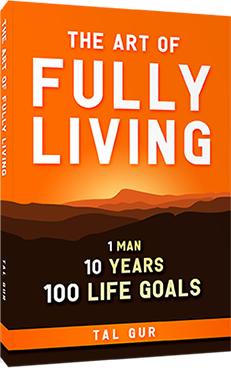
 Tal Gur is an impact-driven creator at heart. After trading his daily grind for a life of his own design, he spent a decade pursuing 100 life goals around the globe. Tal's journey and recent book, The Art of Fully Living, inspired him to found Elevate Society.