52 Churches: Summary Review
What happens when you decide to visit a new church every single Sunday for an entire year, not as a tourist, but as a spiritual explorer open to discovery and challenge? In 52 Churches: A Yearlong Journey Encountering God, His Church, and Our Common Faith, Peter DeHaan invites readers to walk alongside him across fifty‐two distinct Christian congregations, offering insight into faith, community, and the many ways believers worship God.
What is the Book About?
In 52 Churches, Peter DeHaan sets out on an ambitious spiritual experiment, attending a different church every week for one full year. From traditional Protestant sanctuaries and charismatic gatherings to Roman Catholic liturgies and small local fellowships, DeHaan chronicles his experiences with honesty, humor, and curiosity. Along the way, he explores what makes each congregation unique, how they welcome visitors, and how authentic community either flourishes or falters in diverse contexts. His narrative is part personal travelogue, part thoughtful reflection on what it looks like to pursue God alongside imperfect people.
Beyond simply describing services, DeHaan digs into the dynamics of belonging, the nuances of worship styles, and the questions that arise when imperfect humans gather in the name of a perfect God. Through his yearlong journey, he highlights both the heartwarming and awkward moments that shape each church experience, encouraging readers to see beyond surface differences and consider deeper questions about faith, unity, and what it truly means to live in Christian community.
Book Details
Print length: 356 pages
Language: English
Publication date: 2018
Genre: Christian Nonfiction
Book Author
Core Theme
At its heart, 52 Churches is a meditation on belonging. DeHaan’s journey reveals that while churches differ widely in style, tradition, and culture, the underlying yearning for connection with God and with one another is a shared bond. He uses his personal experiences to highlight how communities can both welcome and alienate, and how simple acts of hospitality matter deeply to visitors seeking spiritual belonging. Through reflections on liturgy, worship music, preaching styles, and the nuances of fellowship, DeHaan invites readers to consider how unity and diversity coexist within the broad family of Christian faith.
Another core theme is self-discovery through encounter. As DeHaan steps into sanctuary after sanctuary, he confronts his own preconceptions about worship and faith. What begins as an observational journey gradually becomes a mirror reflecting his own assumptions and biases. In exploring the varied ways Christians practice their faith, DeHaan encourages readers to move beyond judgment toward deeper understanding, and to appreciate the shared heartbeat that unites believers even amid vast differences.
Main Lessons
A few impactful summary lessons from 52 Churches:
1. First Impressions Shape Spiritual Openness Quickly
One of the clearest lessons from the yearlong journey is that a church’s impact begins long before the sermon ever starts. From how easy it is to find the building, to whether the parking lot feels confusing or inviting, to the warmth or awkwardness of the first human interaction, these early moments quietly shape a visitor’s emotional posture. When people feel unseen or unsure at the door, their hearts tend to close before worship even begins. Conversely, when a church creates clarity, friendliness, and ease from the very first step, it lowers anxiety and makes space for deeper engagement with faith, community, and God.
2. Feeling Welcome Determines Whether Visitors Ever Return
Across dozens of visits, a consistent pattern emerges. Visitors are not primarily asking whether the theology is flawless or the music matches their preferences, they are asking a simpler and more human question, do I belong here. Churches that unintentionally ignore newcomers, even while being kind to long time members, often send a message of invisibility that is hard to overcome. When people leave without meaningful connection, even subtle connection, they rarely give the church a second chance. Hospitality is not an accessory to ministry, it is a deciding factor in whether ministry continues with new people at all.
3. Community Is Experienced Through People Not Programs
The journey highlights that no amount of structure, announcements, or well designed services can replace genuine human engagement. Visitors notice when greetings feel scripted, rushed, or transactional, and they also notice when someone takes time to listen, explain, or simply be present. True community is communicated through eye contact, curiosity, and patience rather than polished systems. Churches that rely solely on programs to foster belonging often miss the relational heart that visitors are searching for, especially those who arrive feeling uncertain, shy, or spiritually wounded.
4. Diversity In Worship Reveals Shared Faith Beneath Differences
By stepping into many denominations and worship styles, the journey reveals how varied expressions of Christianity can still point toward the same core faith. While preferences differ around music, liturgy, formality, or ritual, the deeper common thread is the desire to encounter God and grow spiritually. Exposure to this diversity expands perspective and reduces the tendency to assume one style is the only faithful way. It reminds readers that unity does not require uniformity, and that humility grows when we recognize God at work beyond familiar forms.
5. Churches Often Underestimate The Visitor Experience
Many congregations are deeply committed and well intentioned, yet unaware of how confusing or isolating their services can feel to outsiders. Insider language, unexplained rituals, unclear expectations, or assumptions about prior knowledge can quietly alienate first time guests. The journey demonstrates how easily churches forget what it feels like to be new, unsure, or unfamiliar with the flow of worship. Seeing the church through a visitor’s eyes becomes a powerful mirror, revealing blind spots that long time members no longer notice but newcomers feel immediately.
6. Hospitality Requires Ongoing Effort Not One Time Gestures
Welcoming is not a single moment at the door, it is an experience that stretches before, during, and after the service. Churches that excel in one area but neglect others often leave visitors with mixed signals. A friendly greeting means little if no one explains what is happening, follows up afterward, or helps newcomers connect beyond the service. The journey shows that hospitality is a culture, not a task, and it requires shared responsibility across the entire congregation rather than reliance on a few designated greeters.
7. Spiritual Growth And Emotional Safety Are Closely Linked
When people feel emotionally safe, respected, and included, they are more open to spiritual reflection and transformation. Churches that create pressure, judgment, or discomfort often unintentionally block the very growth they hope to inspire. The yearlong experiment reveals that spiritual environments thrive when people feel free to observe, ask questions, and participate at their own pace. Growth flourishes where grace is tangible and expectations are communicated with compassion rather than assumption.
8. Every Church Is Always On The Welcome Team
Perhaps the most challenging lesson is that welcoming visitors is not optional and not reserved for leaders alone. Every member, knowingly or not, represents the church to newcomers. Small actions, choosing to introduce oneself, offering guidance, inviting conversation, can quietly shape someone’s entire perception of faith community. The journey ultimately reframes church hospitality as a shared calling, reminding readers that the church is not only a place people attend, but a presence people embody whenever someone new walks through the door.
Key Takeaways
Key summary takeaways from the book:
- Church communities reflect both their strengths and challenges, and each offers unique insights into faith and worship.
- Welcoming visitors well requires intentionality, warmth, and awareness of how first impressions shape belonging.
- Diversity in worship styles can deepen understanding and appreciation of the broader Christian tradition.
- Authentic Christian fellowship often transcends ritual, reaching into genuine care and connection.
- Self-reflection and openness to learning enrich the spiritual journey more than judgment or comparison.
Book Strengths
One of the book’s greatest strengths lies in its blend of narrative storytelling and thoughtful observation, making theological reflection feel grounded in lived experience rather than abstract theory. DeHaan’s candid voice, willingness to confront awkward moments, and capacity to find humor and insight even in discomfort keep the reader engaged while providing meaningful commentary on church life and community.
Who This Book Is For
This book is ideal for anyone curious about the landscape of contemporary Christian worship, ministry leaders seeking fresh perspectives on welcoming newcomers, and spiritual seekers who want to understand the heartbeat of diverse faith communities. Whether you attend church regularly or are wondering what church means in a broader sense, DeHaan’s journey offers relatable stories and honest reflections that resonate with many different readers.
Why Should You Read This Book?
If you want a book that invites you to look deeper into what it means to gather in faith, this is a compelling read. DeHaan’s yearlong pilgrimage across fifty-two churches offers both entertainment and insight, prompting readers to reflect on hospitality, tradition, and personal belief. It challenges assumptions, celebrates diversity, and ultimately encourages a more compassionate and curious approach to community and faith.
Concluding Thoughts.
52 Churches is more than a travelogue about Sunday services. It is a mirror held up to the heart of Christian community, inviting readers not just to observe, but to engage and grow. DeHaan’s year of exploration makes space for laughter, discomfort, and reflection, reminding us that faith is lived most deeply in encounters with others.
→ Get the book on Amazon or discover more via the author’s website.
* The publisher and editor of this summary review made every effort to maintain information accuracy, including any published quotes, lessons, takeaways, or summary notes.
Chief Editor
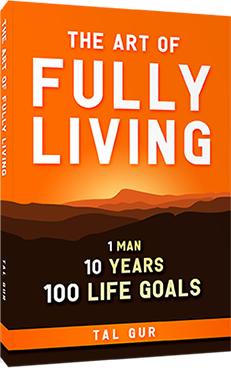
 Tal Gur is an impact-driven creator at heart. After trading his daily grind for a life of his own design, he spent a decade pursuing 100 life goals around the globe. Tal's journey and recent book, The Art of Fully Living, inspired him to found Elevate Society.