Before changing the future, change who’s choosing it.
Most futures are decided long before they arrive.
They are decided in the quiet place from which you choose. The job you accept, the relationship you enter, the goal you pursue, the risk you avoid, the life you imagine. Every choice carries the fingerprints of the person making it.
This is why changing your plans can leave your life strangely unchanged.
You can choose a new city while carrying the same fears. Build a different business from the same hunger for approval. Set a larger goal with the same belief that achievement will finally make you enough. The scenery changes, sometimes dramatically, while the deeper pattern quietly rebuilds itself.
Before changing the future, change who’s choosing it.
We tend to think of the future as something waiting ahead of us, almost like an empty room we can furnish through better decisions. Choose the right career. Find the right partner. Create the right habits. Design the right strategy.
Yet the person entering that room matters more than the furniture.
A fearful self can turn opportunity into threat. An insecure self can turn success into pressure. A restless self can turn freedom into another project to optimize. Even abundance can feel insufficient when it passes through someone who has learned to measure life through lack.
The future does not arrive untouched. It meets your way of seeing.
That changes the nature of personal growth. Instead of asking only, “What should I choose?” a deeper question appears: “Who in me is doing the choosing?”
Perhaps the part choosing your next career move still believes worth comes from being impressive. Maybe the part choosing a relationship is terrified of being alone. Your next goal may be coming from genuine curiosity, or from an old need to prove something that no achievement can settle.

The external choice can look identical while its inner source changes everything.
Imagine two people turning down the same opportunity. One refuses because fear has convinced them they are incapable. The other declines because they know the opportunity would pull their life away from what matters most. From the outside, the action is the same. Inside, two completely different futures have begun.
This is why self knowledge is practical.
It changes decisions.
Before asking where you want to go, notice what within you keeps reaching for the steering wheel. Old identities are persuasive drivers. They know familiar roads. They remember what earned praise, what kept you safe, what prevented rejection, what made you feel valuable. Given the chance, they will keep selecting destinations that confirm what they already believe.
You may call that planning.
Often, it is repetition wearing the clothes of choice.
Real change begins when you become able to see the chooser without immediately obeying it.
Suppose you are considering a major professional opportunity. The obvious approach is to compare salary, status, location, responsibilities, and future potential. All of that matters. Still, another layer deserves your attention.


Ask yourself what kind of person would say yes.
Would the answer come from expansion, interest, service, and a genuine sense of fit? Or would it come from the part of you that cannot bear to disappoint people, needs visible progress, or believes slowing down means falling behind?
Then imagine declining.
Again, notice who appears.
This simple practice changes decision making because it separates the choice from the identity currently attached to it. You begin seeing that some decisions are attempts to protect an old version of yourself, while others belong to the person you are becoming.
A compass offers a useful metaphor. If the compass itself is distorted, studying the map more carefully will not solve the problem. You can plan every mile, calculate every turn, and move with impressive discipline, yet still travel in the wrong direction.
Much of what we call a strategy problem is really an orientation problem.
We keep adjusting the route when the deeper work is recalibrating the compass.
That recalibration happens through awareness, reflection, experience, and the willingness to release identities that once served you. You notice what you are protecting. You question inherited measures of success. You become less interested in choosing what proves who you were and more interested in choosing what expresses who you are now.
Then something subtle happens.
Your ambitions become cleaner.
Goals stop carrying so much emotional weight because they no longer have to rescue your identity. Decisions become simpler because fewer voices inside you are competing for control. You can want something deeply without turning it into evidence of your worth.
From that place, the future becomes less about constructing the perfect life and more about meeting life with greater clarity.
There will always be uncertainty. No amount of inner work gives you complete knowledge of what comes next. Yet certainty about the future was never the real requirement.
What matters is the quality of the person meeting it.
So when you feel tempted to redesign everything ahead of you, look first at the one doing the designing. Notice the beliefs behind the blueprint, the fears hidden inside the preferences, the values quietly asking for more room.
The most powerful future may begin before any visible change occurs.
It begins when the person making the next choice is no longer the same person who made the last one.
Chief Editor
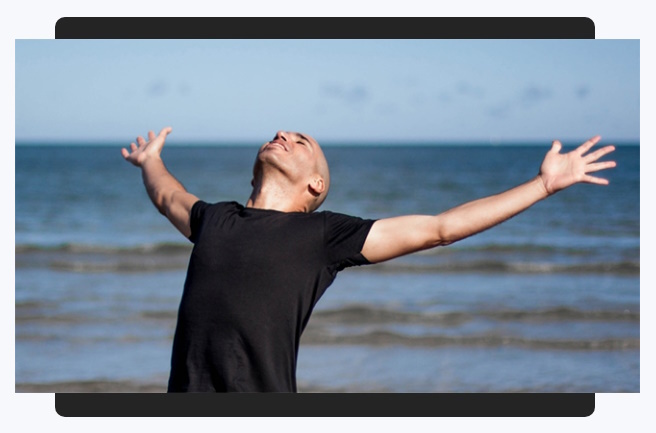
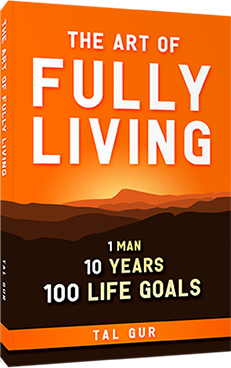
 Tal Gur is an impact-driven creator at heart. After trading his daily grind for a life of his own design, he spent a decade pursuing 100 life goals around the globe. Tal's journey and recent book, The Art of Fully Living, inspired him to found Elevate Society.