Power flows through the one who no longer needs it.
A key feels heavier when you are standing outside a locked door. Once you are inside, it becomes a small piece of metal in your pocket, useful when needed, forgotten when it is not. Power has a similar quality. It carries enormous emotional weight while you are trying to secure it, prove it, protect it, or convince others that you deserve it.
This is one of the quiet paradoxes of power. The more desperately you need it, the more it begins to control you. Your decisions start bending around the possibility of losing status, approval, authority, influence, money, or control. You may appear powerful from the outside while becoming increasingly dependent on everything that confirms your position.
Then something changes when the need falls away.
You can still lead. You can still build, decide, earn, influence, negotiate, create, and take responsibility. Ambition can remain fully alive. Yet there is less fear underneath it. You no longer need the position to tell you who you are.
That freedom changes the quality of your power.
Consider two leaders entering the same difficult meeting. Both have authority to make the final decision. One needs everyone in the room to recognize that authority. Disagreement feels personal. Questions feel like challenges. Every exchange becomes a subtle contest over who controls the room.
The other leader has nothing to prove about their place at the table. They can listen longer. They can change their mind without feeling diminished. They can give someone else credit. They can admit uncertainty. They can make an unpopular decision when necessary and accept the discomfort that follows.
Paradoxically, the second person often carries more influence.
Their freedom creates room around them.
This is where power becomes less like a weapon and more like water. Water does not argue with the shape of the land. It moves around obstacles, enters openings, gathers strength, nourishes what it touches, and keeps moving toward where it belongs. Its power comes partly from its lack of rigidity.
Human power works much the same way. When your identity becomes rigidly attached to being important, respected, admired, wealthy, indispensable, or right, every threat to that identity requires energy. You become occupied with defending the container instead of directing what flows through it.

Release the attachment, and that energy becomes available again.
This matters far beyond formal leadership. You can see it in relationships, creative work, business, and ordinary conversations.
Imagine that you are negotiating an opportunity you deeply want. If your sense of future possibility has narrowed to this single outcome, you enter the conversation carrying invisible pressure. You may agree too quickly, explain too much, ignore conditions that feel wrong, or shape yourself around what you believe the other person wants.
Now imagine wanting the same opportunity while remaining willing to walk away.
The desire is still there. Your preparation can be just as serious. Your care can be just as deep. Yet your judgment remains intact because the outcome does not own you. You can ask clearer questions. You can speak more simply. You can recognize when an appealing opportunity is actually a poor fit.
That willingness to leave is a form of power.
So is the willingness to stay without needing applause.
Many people spend years trying to gain enough external power to finally feel internally secure. The sequence rarely works as imagined because every new level introduces something new to protect. More recognition can create a greater need for recognition. More control can make uncertainty harder to tolerate. More success can turn yesterday’s achievement into today’s identity.
Eventually, the deeper work becomes obvious. You have to discover what remains when the symbols of power are removed.


Can you still trust your judgment when nobody agrees with you?
Can you remain grounded when someone else receives the recognition?
Can you make a meaningful decision without knowing how it will affect your image?
Can you hold responsibility without making authority part of your identity?
These questions lead toward a different relationship with ambition. You stop asking achievement to complete you. Goals become places to direct your energy rather than structures holding up your worth.
Strangely, this often makes you more effective.
Less energy goes into guarding your identity. More becomes available for the work itself. You can respond to reality rather than defending a story about yourself. You become easier to trust because people sense that you are less interested in controlling their perception of you.
Perhaps this is why genuine power often feels surprisingly quiet. It does not have to announce itself every few minutes. It can give space, share credit, reconsider, apologize, refuse, leave, stay, and begin again.
The deepest form of power may arrive when power stops being something you are trying to possess.
You still use it. You still respect its consequences. You still take responsibility for what moves through your hands. Yet you hold it the way you might hold that key after entering the house, lightly, without constantly checking whether it is still there.
And in that loosened grip, something opens.
You become capable of carrying more because you need less from what you carry.
Chief Editor
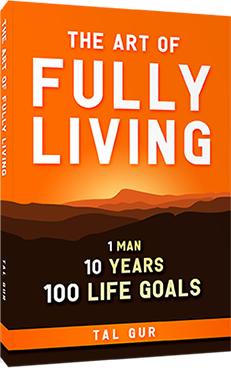
 Tal Gur is an impact-driven creator at heart. After trading his daily grind for a life of his own design, he spent a decade pursuing 100 life goals around the globe. Tal's journey and recent book, The Art of Fully Living, inspired him to found Elevate Society.