Stop trying to feel good. Try staying when it doesn’t.
The moment discomfort arrives, most of us start negotiating with reality.
We reach for relief. A distraction. A better thought. A different conversation. Something sweet, useful, entertaining, spiritual, productive, anything that changes the inner weather. Feeling bad begins to seem like a problem that needs solving.

That reflex makes sense. Yet a life organized around feeling good becomes surprisingly fragile. Every difficult emotion starts carrying a second burden: the belief that it should already be gone.
There is another way to meet discomfort.
Stay.
Stay long enough to discover what the feeling actually contains. Stay without turning the moment into a verdict about your life. Stay without rushing to make yourself positive, calm, grateful, certain, or inspired.
Much of what we call emotional strength begins here.
You can think of discomfort like muddy water in a glass. Shake the glass and the water remains cloudy. Keep shaking because you dislike the cloudiness and clarity becomes impossible. Set the glass down, however, and something changes on its own. The sediment begins to settle.
Our inner life often works this way.
We keep stirring ourselves because stillness feels too exposed. We analyze the conversation again. We check the phone. We imagine tomorrow. We search for reassurance. We tell ourselves a more encouraging story. Each move seems small, yet together they keep the water moving.
Staying means setting the glass down.

This does not require enjoying what you feel. Sadness can remain sadness. Fear can still tighten the chest. Disappointment can ache. The practice is simply to stop making immediate relief the measure of whether the moment is going well.
That shift changes your relationship with experience.
When feeling good becomes the goal, you quietly teach yourself that certain parts of being human are unacceptable. Anxiety means something has gone wrong. Grief becomes an interruption. Doubt feels like failure. Frustration becomes evidence that you chose badly.
Soon you are managing your emotions instead of listening to them.
Some feelings need action, of course. Others need space. Knowing the difference becomes much easier when you can remain present for a little longer.
Imagine receiving an email that unsettles you. Perhaps someone questions your work, declines an idea, or responds more coldly than expected. The familiar impulse is immediate. You might defend yourself, compose a sharp reply, seek reassurance from someone else, or decide the whole situation means more than it does.
Try something simpler.
Read the message. Notice what happens in your body. Name what is there without building a case around it. Embarrassment. Anger. Fear. Whatever appears, give it a little room before deciding what it means or what should happen next.
An hour later, the facts may be exactly the same, while the person responding to them has changed.


That is the hidden value of staying. You stop allowing temporary states to make permanent decisions.
There is maturity in discovering that an uncomfortable moment does not require immediate escape. You can feel uncertain and still move wisely. You can feel hurt and remain kind. You can feel afraid and keep your footing. You can experience disappointment without turning against the life that contains it.
This is where many forms of freedom begin.
A person who must always feel good is easy to control. Anything promising relief gains power over them. Approval gains power. Distraction gains power. Comfort gains power. Even personal growth can become another form of escape when every practice is used to remove whatever feels unpleasant.
The deeper practice asks something quieter of you.
Can this moment be allowed to exist before you improve it?
That question creates room.
Strangely, the willingness to stay often allows difficult feelings to move more naturally. Emotions become sticky when we grip them, fight them, explain them endlessly, or demand that they leave. Give them honest attention and many reveal their temporary nature.
A wave does not need your help to reach the shore.
Your work is learning that you can remain standing while it passes through.
This matters far beyond emotional comfort. The ability to stay shapes relationships, creative work, leadership, parenthood, difficult conversations, and every meaningful commitment. Anything worth caring about eventually introduces discomfort. Intimacy brings vulnerability. Ambition brings uncertainty. Truth brings moments when the old story can no longer protect you.
If your first loyalty is always to feeling good, you will often leave precisely where life is asking you to deepen.
So perhaps the better question when discomfort arrives is not, “How do I get rid of this?”
Ask, “Can I remain here without abandoning myself or the moment?”
Sometimes you will still need to walk away, speak up, rest, change direction, or make a hard decision. Staying does not mean becoming passive. It means letting your response come from somewhere deeper than the first urge to escape.
There is a quiet confidence that grows from this. You begin to trust your capacity to hold more of life without needing every moment to become pleasant.
And slowly, feeling good loses its position as the prize.
Something steadier takes its place.
The knowledge that whatever arrives, you can meet it, remain present long enough to hear what it has to say, and choose your next step with your whole self still in the room.
Chief Editor
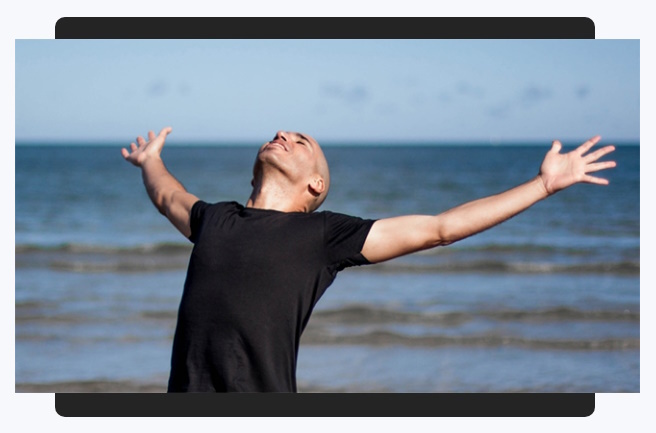
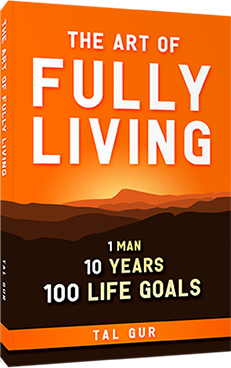
 Tal Gur is an impact-driven creator at heart. After trading his daily grind for a life of his own design, he spent a decade pursuing 100 life goals around the globe. Tal's journey and recent book, The Art of Fully Living, inspired him to found Elevate Society.